Buying a Lake Hamilton Home: Key Details to Review
June 4, 2026
June 4, 2026
Buying on Lake Hamilton is exciting, but it also comes with questions you will not face in a typical neighborhood. A home can have water access, a dock, and a beautiful shoreline view, yet the rules tied to that shoreline may be very different from what you expect. If you are planning to buy on Lake Hamilton in the 71913 area, this guide will help you understand the details that matter most before you make an offer. Let’s dive in.
Lake Hamilton is a hydroelectric reservoir on the Ouachita River created by Carpenter Dam. Entergy Arkansas operates the Carpenter-Remmel Project under a federal license, and Entergy states that it owns the dams, shoreline, and land under the lakes, while the water itself is public.
For you as a buyer, that means a waterfront purchase is not only about the home and lot lines. Shoreline use, dock rights, and certain improvements may be controlled by Entergy permits in addition to the property deed and local rules. Two properties that look similar from the water can have very different allowed uses.
One of the most important steps in buying on Lake Hamilton is confirming exactly what kind of waterfront situation you are getting. Some properties are deeded directly to the water, while others may have an Entergy boundary between the deeded lot and the natural shoreline.
That distinction matters because permits may be required for construction or changes in those areas. If Entergy owns the land between your lot and the shoreline, or if the federal project boundary extends above the natural shoreline, you may need approval before building or modifying anything there.
Entergy uses shoreline categories such as residential, commercial, public, and multipurpose. It also maps management classifications like general use, limited use, and resource management.
In practical terms, your ability to add or change a dock, boardwalk, swim deck, or stabilization feature can depend on the exact classification of the property. This is why two neighboring lots may have different permit rules even if they appear almost identical.
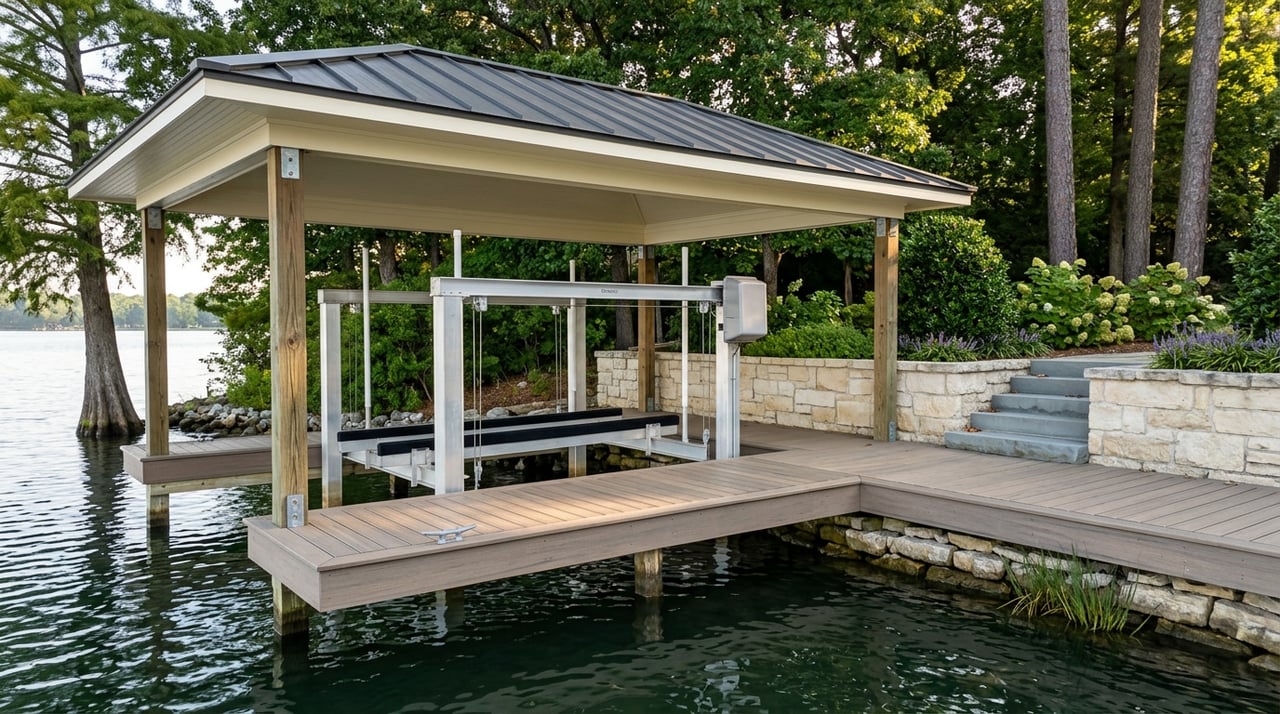
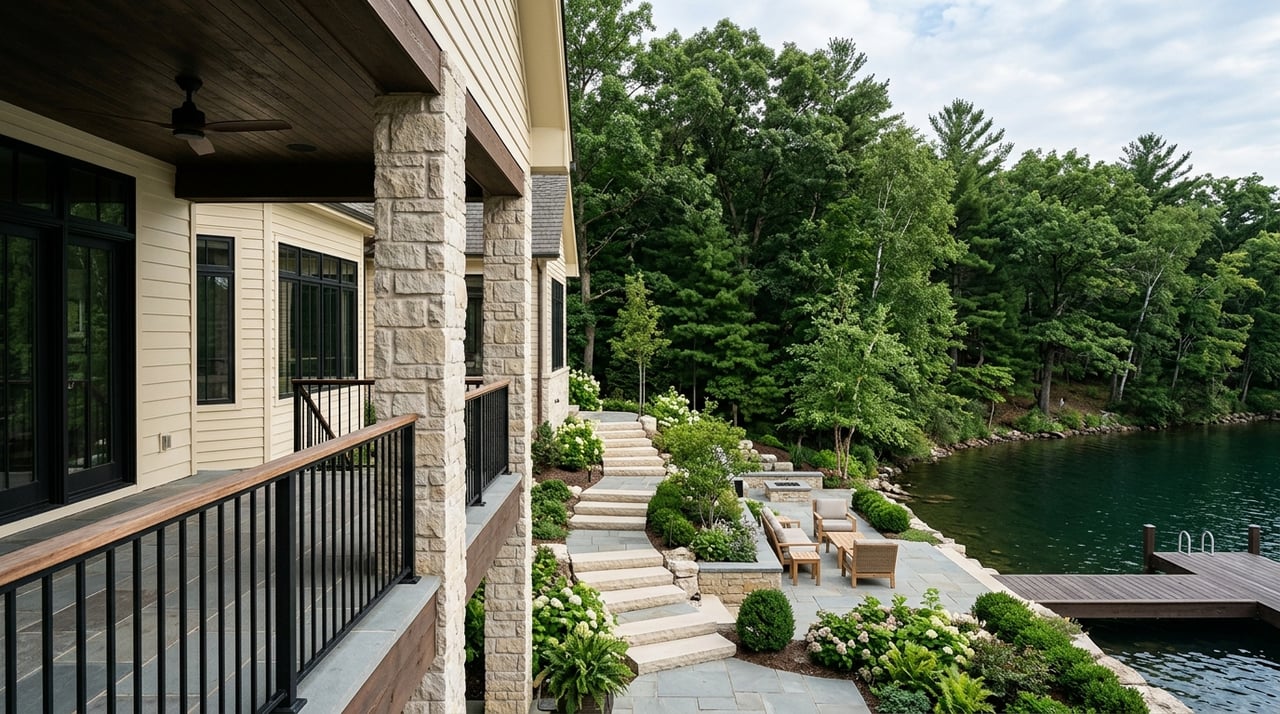
Lake Hamilton homes often include features that add value and enjoyment, but each one should be reviewed carefully during due diligence. Common improvements include:
If a property includes any of these features, ask for documentation early. You want to know whether the improvement was permitted, whether it meets current requirements, and whether anything must be corrected before ownership changes.
A lot with water frontage does not always guarantee dock eligibility. Entergy states that parcels platted before January 1, 2006 may still qualify under an older 45-foot frontage guideline, while newer frontage standards are 75 feet.
That is a major issue if you are buying with plans to build a dock later. You should verify dock eligibility before writing an offer, not after closing, because assumptions can be expensive.
If you are considering a floating dock, depth and location both matter. Entergy states that floating docks require about 7 feet of depth at the dock location.
They are also prohibited in limited use zones such as fish spawning and nursery areas and wetlands. So even if a lot looks ideal from the bank, the site may not support the type of dock you want.
Many buyers assume they can buy first and handle dock or shoreline updates later. On Lake Hamilton, timing can affect that plan.
Entergy accepts private facility permit applications only from March 15 through November 30 each year. If you plan to build or modify a dock, boardwalk, seawall alternative, or shoreline stabilization, you will want to confirm the permit window and expected lead time before making final decisions.
Lake Hamilton also has seasonal lake-level changes to keep in mind. Entergy publishes a summer lake level range and states that the annual drawdown begins November 1, with refill scheduled from March 1 to March 15.
These changes can affect how a property looks and functions during different times of year. If possible, it helps to evaluate photos, disclosures, and shoreline condition with seasonal changes in mind.
A standard home inspection is important, but on Lake Hamilton it should not be your only layer of due diligence. Waterfront features need their own careful review.
Entergy now requires single-family residential facilities on its property, including boat docks, swim decks, and boardwalks, to be inspected before permit transfer when ownership changes. According to Entergy, these reports may identify issues such as signage problems, electrical condition, and whether the facility size or position complies with requirements.
When you are evaluating a Lake Hamilton property, pay close attention to:
This extra review matters because lake properties are exposed to changing water levels, seasonal drawdowns, and permit-controlled shoreline work. A beautiful setting should still be backed by clear paperwork and sound condition.
Flood risk deserves its own review separate from the general home inspection. Garland County states that development in flood hazard areas requires permits, and county floodplain resources direct buyers to FEMA flood maps and county flood data maps.
You should also request an insurance quote early in the process. Flood insurance is separate from a standard homeowners policy, and FEMA states that most homeowners policies do not cover flood damage.
If flood coverage is needed, timing matters. FEMA states that National Flood Insurance Program coverage usually has a 30-day waiting period unless the purchase is tied to lender-required coverage or a community flood map change.
That is why it helps to check flood mapping and costs early rather than waiting until the last minute. Knowing the likely insurance expense can affect your comfort with the monthly payment and overall ownership costs.
How you plan to use the property can shape your financing options. A lender will want to know whether the home will be your primary residence, second home, or investment property.
That occupancy choice matters because underwriting standards, reserve requirements, and permitted rental use can change with the loan type. On lake properties, this is especially important because many buyers are shopping for a vacation-style home.
Conventional financing is often the most flexible fit for a true second home. Research in the report shows that second-home rules generally require the property to be a one-unit home, suitable for year-round occupancy, occupied by you for some part of the year, and not treated as a timeshare.
The report also notes that rental income from a second home generally cannot be used to qualify for the loan. In addition, there may be reserve requirements if you already own multiple financed properties.
Government-backed loan programs are usually more restrictive for vacation-style properties. Because of that, it is important to be clear with your lender from the beginning about how you actually plan to use the home.
If your goal is a primary residence, that is one path. If your goal is a second home with occasional personal use, that is another. If you are evaluating it as an investment property, your financing may look different again.
If you are buying on Lake Hamilton as a primary residence, you may want to ask about Arkansas homestead tax relief. According to the Arkansas Department of Finance and Administration, the homestead tax credit applies to a homestead used as a principal place of residence, and a property owner may claim only one homestead credit each year.
The report states that the credit is up to $500 per year, with an increase to up to $600 beginning with 2026 tax bills. A second home generally does not qualify.
Garland County's assessor handles the local homestead process. If you are buying a full-time residence in the 71913 area, it is smart to confirm how your intended occupancy lines up with local filing requirements.
The key point is simple: do not assume owner-occupied tax relief if the home will really function as a second home or vacation property.
Before you move forward on a waterfront home, make sure you have answers to the questions that can affect both value and future use.
Here is a practical checklist to keep in mind:
Buying on Lake Hamilton is rewarding, but it is also layered. You are not just evaluating square footage, finishes, and views. You are also reviewing shoreline classifications, dock rights, inspection reports, flood considerations, financing strategy, and property tax implications.
That is where local experience can make the process smoother. When you work with a broker who understands the Lake Hamilton market, you are better positioned to ask the right questions early, avoid surprises, and move forward with confidence.
If you are thinking about buying a home on Lake Hamilton, Trademark Real Estate, Inc can help you navigate the details and find a property that truly fits the way you want to live.
Stay up to date on the latest real estate trends.
Get assistance in determining current property value, crafting a competitive offer, writing and negotiating a contract, and much more. Contact me today.

4262 CENTRAL AVE HOT SPRINGS AR 71913